
Your rights to the matrimonial home in Ontario
Last updated: September 27, 2026
Reviewed against primary Ontario sources — August 2026
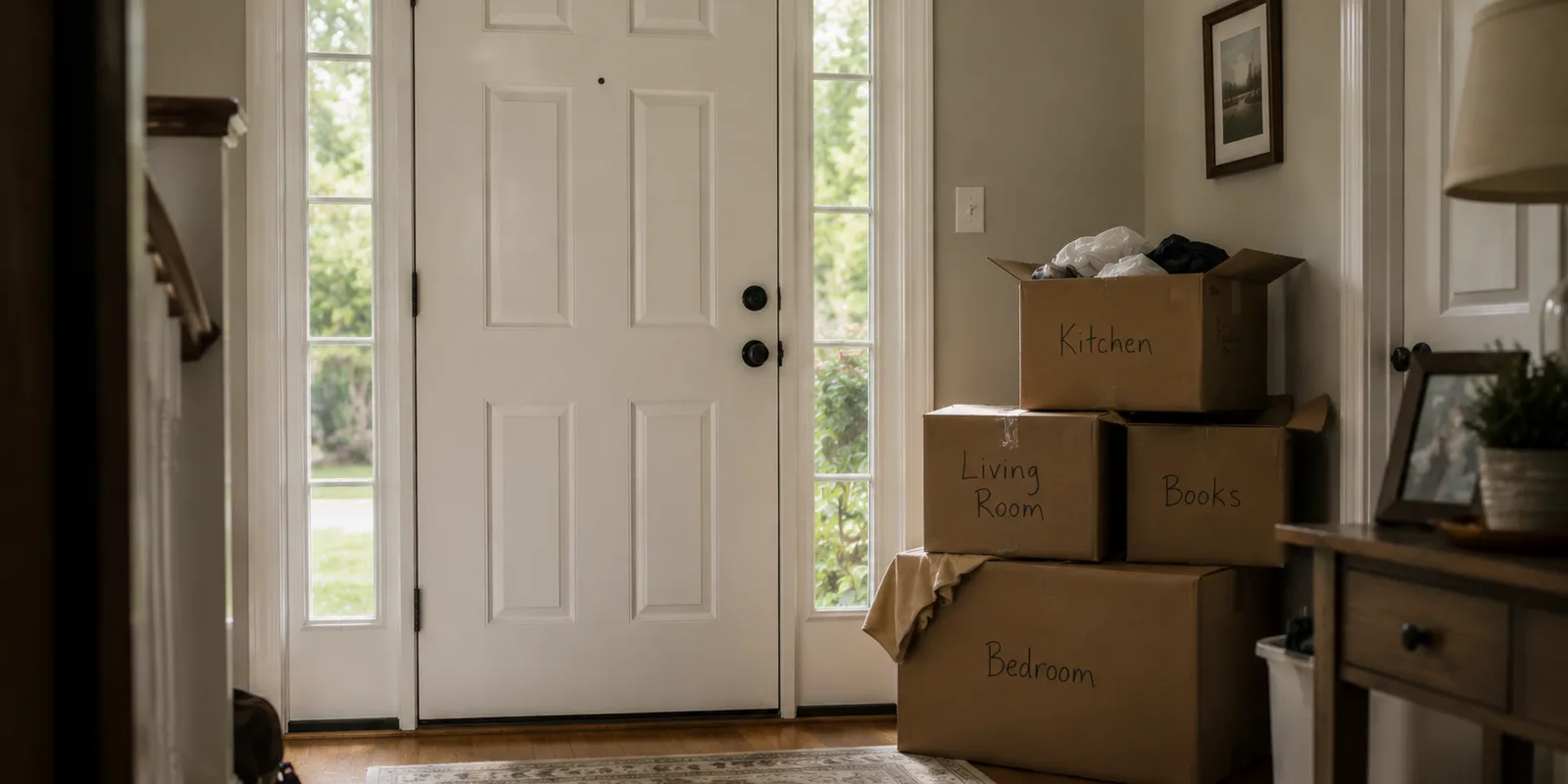
TL;DR. In Ontario, both spouses have an equal right to possession of the matrimonial home — the house you and your spouse have been living in together — regardless of whose name is on title. Your spouse cannot evict you, cannot change the locks on you, and cannot list the house for sale without your written consent. The only way one spouse gets sole occupation is a court-ordered "exclusive possession" order under section 24 of the Family Law Act, which is granted in a minority of cases. The house also gets special treatment in the property-division math. This article walks you through both the possession question and the financial question — and the one thing to do this week.
Why this matters
Most of the panic in the first 48 hours of a separation is panic about the house. Can she kick me out. Should I leave. Will I lose my claim if I sleep at my brother's tonight. Half of those questions are answered by knowing one definition and one section number.
The other half — what the house does to your numbers when you eventually divide property — is where the surprises live. Both halves are worth understanding before you do anything irreversible.
What counts as the "matrimonial home" in Ontario?
The matrimonial home is defined in section 18(1) of the Family Law Act as the property in which a person has an interest and that is ordinarily occupied by the person and their spouse as a family residence at the time of separation. Plain English: it's the house you've been living in together. There can be more than one matrimonial home — a cottage you also live in part of the year counts. A rental house counts if you've been renting it together. A condo you bought before the marriage counts if you've been living there together as spouses.
A few things to know up front. First, "matrimonial home" status only applies to married couples — common-law partners do not have matrimonial home rights under the Family Law Act, though they have other claims worth understanding (see our guide to common-law separation in Ontario). Second, the term is location-specific — it's the home you ordinarily occupy in Ontario; a vacation property in Florida is treated differently. Third, ownership doesn't matter for the possession question. If your name is not on title at all, you still have equal possession rights from the moment of separation until the property is dealt with by agreement or court order.
The distinction between possession and ownership is the single most important thing to internalise here. Possession is about who gets to live there. Ownership is about who gets the money when the house is eventually sold or bought out. Those are two separate questions, governed by two different sections of the Act.
| Question | Possession | Ownership |
|---|---|---|
| Governing rule | FLA s.19 — equal possession | FLA s.4 — equalization / NFP |
| Depends on title? | No | Yes, but no marriage-date deduction |
| What it decides | Who gets to live there | Who gets the money on sale or buy-out |
Can my spouse force me to leave the house?
No. Not on her own. Your spouse cannot legally evict you, cannot change the locks on you, and cannot call the police to remove you on the basis that "it's her house." Equal possession means equal — and it does not depend on whose name is on title, who pays the mortgage, or whose parents lent the down payment (Family Law Act, s. 19).
The one exception is a court order. Either spouse can apply for exclusive possession of the matrimonial home under section 24 of the Family Law Act. The judge weighs a specific set of factors set out in section 24(3) — the best interests of any children affected, any existing support orders or property claims, the financial position of both spouses, any written agreement between them, the availability of other suitable accommodation, and any history of violence. The bar is real. Exclusive possession is not granted because the marriage is over and one of you would rather not see the other in the kitchen. It is granted where shared occupation is genuinely unworkable — most often because of safety concerns or because one spouse is the primary caregiver and the children's stability requires it.
If you are facing an exclusive-possession application — or thinking of bringing one — read our cluster post on exclusive possession of the matrimonial home for the test in detail. In most separations, neither spouse brings an application. They co-exist in the home, awkwardly, until a separation agreement or sale closes the question. That is the norm, not the exception.
If your situation involves the locks, the police, or the threat of either, the more direct piece to read is can my spouse change the locks while we're separating? — that one is written for the State 1 phone-in-hand moment.
Should I leave the house?
This is the question that makes or breaks the first week. There is no rule requiring you to leave and no rule requiring you to stay. Both spouses keep an equal right of possession under FLA s. 19 until the home is dealt with by agreement or court order.
Moving out doesn't waive your ownership interest. The Act protects your equity claim regardless of where you sleep. What moving out can do is shift two things: your access to the children, and the practical bargaining position around the house. If you move out and your kids stay with their mother in the home, you have created a status quo. Courts look at status quo when deciding parenting arrangements. The longer it persists, the more weight it carries. A move that felt like de-escalation in week one can read like consent to primary residence in week ten.
There are situations where leaving is the right call — escalating conflict in front of the children, your own mental health needing space, a safety concern of any kind for any household member. None of those are written off here. The point is that the decision deserves more than a Tuesday-night impulse. If you're considering moving out, talk to a lawyer first, even briefly. A short consultation can save months of negotiation later. The free Cairn 5-minute intake flags whether your situation is one where leaving is common or one where staying matters.
How does the matrimonial home affect property division?
Here is where the math gets unusual. Ontario divides marital property using a calculation called equalization — the formal name is Net Family Property, or NFP. Each spouse calculates the net worth they had on the date of marriage and the net worth they have on the date of separation. The increase is each person's NFP. The spouse with the larger NFP pays half the difference to the other. That payment is called an equalization payment. Full overview in our pillar on equalization and dividing property in Ontario.
The matrimonial home gets two pieces of special treatment in that math. First, the equity in the matrimonial home on the date of separation is included in your NFP, exactly like any other asset. Second — and this is the rule that catches men off guard — the value of the matrimonial home on the date of marriage is not subtracted from your NFP, even if you owned it outright before you got married. Section 4 of the Family Law Act excludes the matrimonial home from the "date of marriage" deduction that applies to every other asset. Plain English: if you brought a $400,000 paid-off house into the marriage and it's worth $700,000 ten years later when you separate, the full $700,000 enters your NFP, not just the $300,000 of appreciation. That can move an equalization payment by six figures.
This is why the question "is this the matrimonial home" matters even after the marriage ends. A second property — a cottage, a rental, a condo you kept for visiting parents — only counts as a matrimonial home if it was ordinarily occupied as a family residence at separation. Whether a property fits that test is fact-specific. It is one of the most-litigated questions in Ontario family law. To see what your specific numbers might look like with and without the home in the calculation, use the Cairn calculator — the equalization estimate handles the matrimonial-home rule automatically.
What about myths I keep hearing?
A few that come up almost every week, and the actual answer to each.
"If the house is in her name, she can kick me out." No. Equal possession does not depend on title (Family Law Act, s. 19). The same answer applies in reverse — if the house is in your name only, you cannot tell her to leave either.
"If I leave, I lose my claim to the house." No. Your ownership interest is protected regardless of where you sleep. What moving out can affect is the practical bargaining around occupation, and (separately) the status quo around the children. The ownership claim itself is unaffected.
"She can sell the house if I refuse to sign." No. Section 21 of the Family Law Act requires both spouses to consent to any sale, mortgage, lease longer than three years, or encumbrance of the matrimonial home. Any disposition without both signatures is voidable. This applies even if the house is in only one spouse's name.
"We're not married, so this doesn't apply." Correct in part — common-law partners are not covered by the matrimonial-home sections of the Family Law Act. Possession rights for common-law partners come from the regular law of property and tenancy, and from the Landlord and Tenant Board for renters. See our pillar on common-law separation in Ontario and the cluster on renting and separation for the detail.
"I can list the house tomorrow if I want." No. The same section-21 rule applies in reverse. Neither spouse can list or sell without the other's written consent. Trying to is one of the fastest ways to invite a court application.
What if we rent?
A leased family home is still a matrimonial home — married spouses keep the equal right of possession; the lease and the Residential Tenancies Act govern the tenancy itself (there is just little or no equity to divide). If both names are on the lease, both have equal tenancy rights. If only one is on the lease, the other's rights depend on whether the landlord recognises them as an occupant. Either spouse can apply to the Landlord and Tenant Board for an order around tenancy at separation. Our if you rent, what rights do you have at separation cluster covers this in full. The general point: the protections discussed above are about ownership and about the matrimonial-home concept in the Family Law Act. They do not all carry over to a rental. Get specific advice if you're a tenant.
The one thing to do this week
Pull the title and mortgage documents for your matrimonial home and write down two numbers — the current estimated market value (use a recent comparable sale, not the assessment) and the current mortgage balance. The difference is your gross equity. That number is the centre of nearly every conversation you will have about the house from this point forward, and the men who know it walk into negotiations meaningfully more grounded than the men who don't.
Where Cairn helps next
A five-minute intake gives you a specific Ontario plan, your support numbers, and the one thing to do this week. Free, no credit card.
- Your specific Ontario plan, free, in five minutes
- The action plan that tells you the next step every week
- Built only for Ontario family law
The Cairn dashboard pulls property, support, and parenting into one place. The calculator handles the equalization math the moment your two numbers are in. The what we do page lays out the scope — Ontario only, information not legal representation.
Frequently asked questions
- Can my spouse make me leave the matrimonial home in Ontario?
- No. Both married spouses have an equal right to possession of the matrimonial home regardless of whose name is on title. Only a court-ordered exclusive possession under section 24 of the Family Law Act can change that, and it is granted in a minority of cases.
- Should I move out of the house during separation?
- There is no rule either way. Both spouses keep an equal right of possession until the home is dealt with by agreement or court order. Moving out does not waive your ownership interest, but it can create a parenting status quo and weaken your practical position around the home, so it is worth advice before deciding.
- Can my spouse sell the house if I refuse to sign?
- No. Section 21 of the Family Law Act requires both spouses' written consent to sell, mortgage, or lease the matrimonial home - even if it is in only one spouse's name. A disposition without both signatures is voidable.
- Does the matrimonial home count differently in property division?
- Yes. Its full separation-date value enters your Net Family Property, and you do not get the usual date-of-marriage deduction even if you owned it outright before marrying. That can move an equalization payment by six figures.
- Do common-law partners have matrimonial home rights in Ontario?
- No. The Family Law Act matrimonial-home sections apply only to married spouses. Common-law partners' rights at separation come from property law, the lease, and the Residential Tenancies Act, not the matrimonial-home regime.