
Can my spouse change the locks while we're separating?
Last updated: August 30, 2026
Reviewed against primary Ontario sources — August 2026
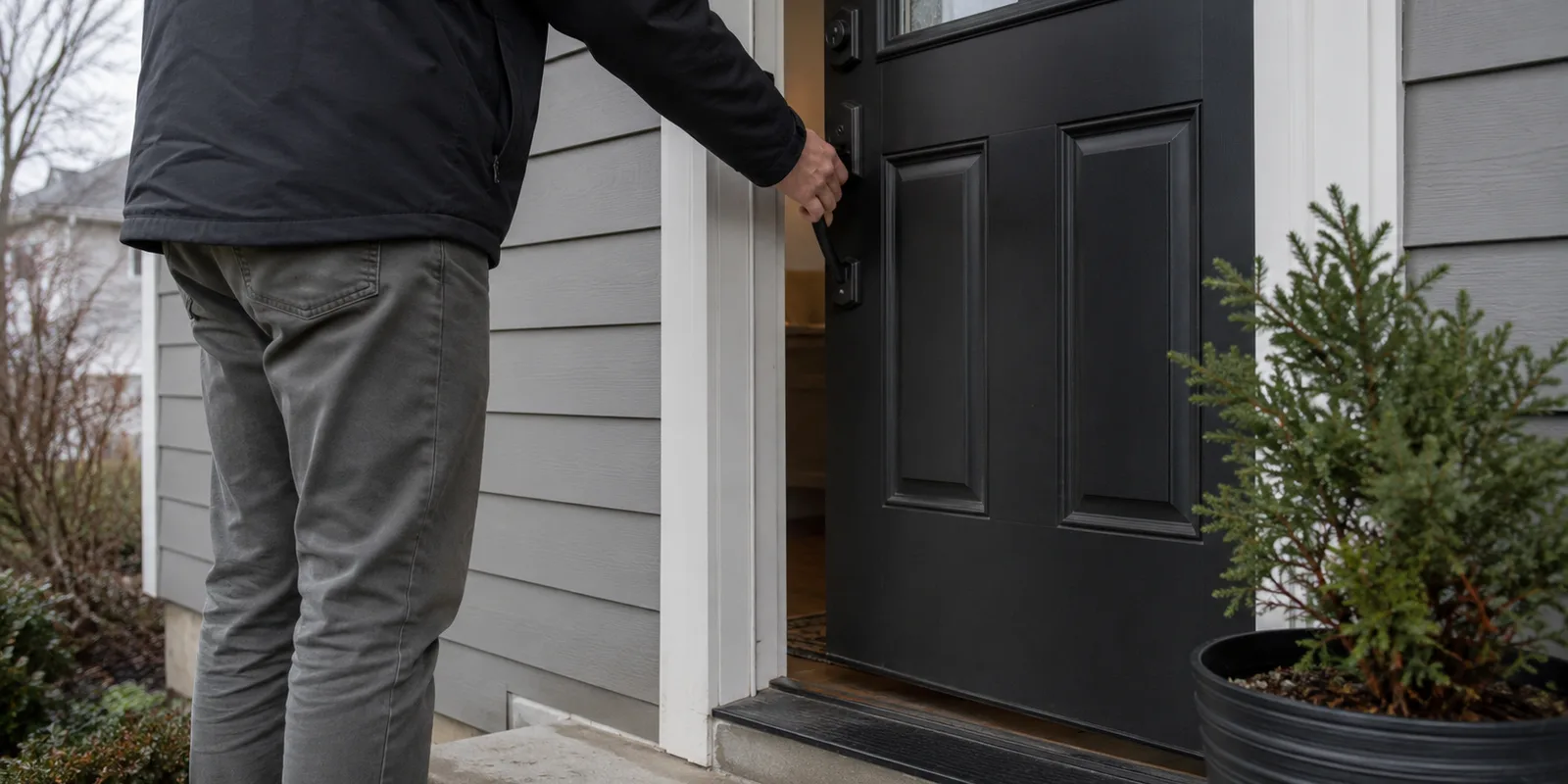
No. In Ontario, both spouses have an equal right to possess the matrimonial home regardless of whose name is on title. Your spouse cannot legally change the locks on you, and if she does, you do not lose your right of possession — but do not force your way back in. The fix is legal, not physical: a court can restore your access.
This rule comes from the Family Law Act, Part II, which treats the matrimonial home as a special category of property during separation. The legal title doesn't matter. What matters is that it was the family residence at the date of separation. Both of you have the right to be in it.
When this does apply
The standard case: you are married, you have been living together in a home (owned or rented, in either spouse's name or both), and one or both of you have decided to separate. From the moment of separation through the date a court order or signed agreement says otherwise, both spouses have equal right of possession.
This means:
- Your spouse cannot change the locks unilaterally.
- Your spouse cannot remove your belongings from the home.
- Your spouse cannot bar you from entering the home.
- Your spouse cannot demand that you leave on a specific timeline.
The same rule cuts in the other direction — you cannot lock her out either, and you cannot remove her belongings or exclude her. This is a possession-equality rule, not a possession-by-stronger-party rule.
When this doesn't apply
Three situations change the analysis:
| Situation | Can she lock you out? |
|---|---|
| Married, in the matrimonial home | No — equal possession runs both ways |
| A court exclusive-possession order (s. 24) is in place | Yes — the order overrides equal possession |
| Common-law, and you are not on the lease or title | Yes — possession follows the lease or title |
A court has issued an exclusive possession order. Either spouse can apply to the court under Family Law Act s. 24 for an order giving them exclusive possession of the matrimonial home. Courts grant these orders when there are safety concerns (especially family violence), where shared occupation has become genuinely unworkable, or where the children's stability requires it. The orders are not automatic and are not granted on a hunch — there is a real test the applicant has to meet. We have a deeper post on exclusive possession of the matrimonial home.
You are common-law, not married. Common-law partners in Ontario do not have the same matrimonial-home rights as married spouses. Possession follows lease or title. If your name is not on the lease or the title, your common-law partner can legally remove you. This is one of the most important differences between marriage and common-law in Ontario family law.
You moved out before separation and are not seeking to return. If you have established a separate residence and are not asserting a possession right, the dynamics change. The right doesn't disappear instantly, but it gets weaker the longer you are absent.
What to do
If your spouse has already changed the locks or is threatening to:
- Do not break in or escalate physically. Whatever you do in this moment will be on the record.
- Do not call the police unless there is a safety concern. Locked-out spouse is a civil matter, not a criminal one — police generally won't intervene.
- Document the lockout: photographs of the locks, time-stamped, and any communication from your spouse threatening or admitting it.
- Contact a licensed Ontario family law paralegal or lawyer immediately. The remedy is a court order — a family lawyer can bring an urgent motion to restore your access — timing depends on the court.
- While you are arranging that, find a temporary place to stay. Going back to fight about it is the wrong move.
If the lockout arrives alongside allegations against you, read what to do when you are falsely accused of abuse in an Ontario family case.
If you are worried this might happen:
- Talk to a paralegal early — before any lockout — about your rights and what an emergency motion would look like.
- Read your full rights to the matrimonial home in Ontario.
- Read the first 30 days of separation guide so you understand the broader context.
See your specific Ontario plan at cairnguide.ca/signup.
Frequently asked questions
- Can my spouse change the locks on me in Ontario?
- No. Both married spouses have an equal right to possession of the matrimonial home regardless of whose name is on title. Your spouse cannot legally change the locks, remove your belongings, or bar you from entering. The rule comes from Part II of the Family Law Act.
- Can I change the locks on my spouse in Ontario?
- No, not unilaterally. The same equal-possession rule cuts both ways. The only way one spouse gets sole occupation of the matrimonial home is a court-ordered exclusive possession under section 24 of the Family Law Act, granted in a minority of cases.
- Can my common-law partner lock me out?
- Often yes. Common-law partners do not have matrimonial-home rights under the Family Law Act. Possession follows the lease or the title, so if your name is not on either, your common-law partner can legally remove you. This is one of the most important differences between marriage and common-law in Ontario.
- What should I do if my spouse has already changed the locks?
- Do not break in or escalate. Document the lockout with time-stamped photographs and any communication, then contact an Ontario family law paralegal or lawyer immediately. The remedy is a court order — often via an urgent motion for restoration of possession that can be filed within days.